

Buying or selling property is exciting. Then the closing costs sheet lands on your desk and you spot a line item you weren’t expecting: attorney fees. If you’re wondering how much does a real estate attorney charge, you’re not alone. It’s one of the most common questions buyers and sellers ask once they start budgeting for a transaction.
The honest answer is, it depends. These costs shift based on where you live, how complicated your deal is, and whether the attorney bills by the hour or charges a flat rate. In this guide, we’ll break down real numbers, explain what drives the total up or down, and help you figure out whether hiring one is worth the money for your situation.
By the end, you’ll know exactly what to ask before you sign an engagement letter and how to avoid paying for services you don’t actually need.
How Much Does a Real Estate Attorney Charge?
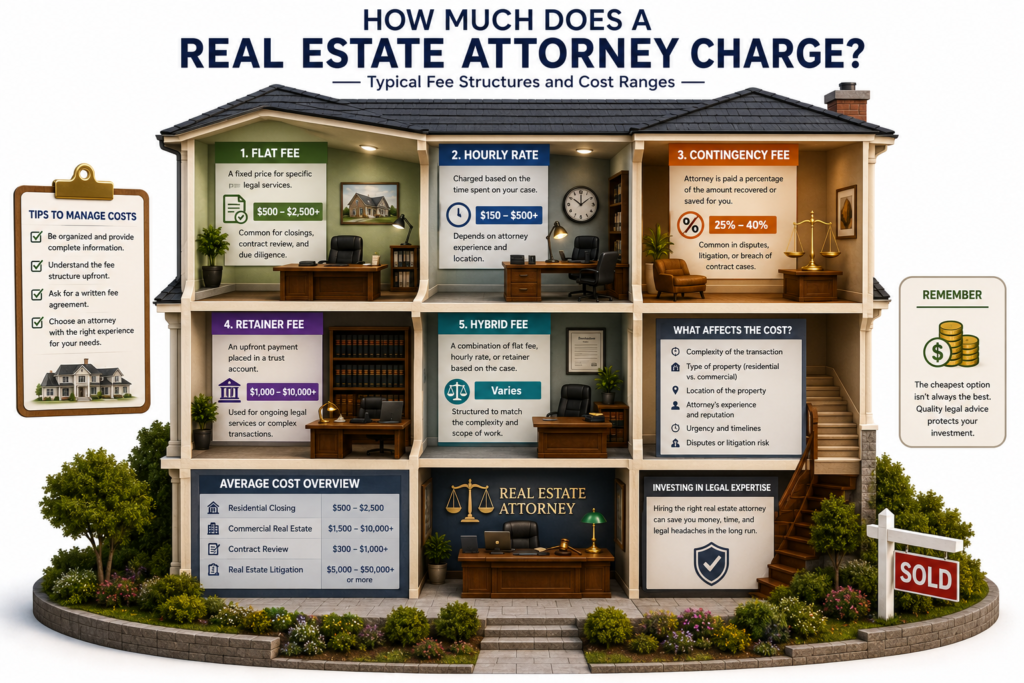
Most real estate lawyer fees fall into one of two structures: hourly billing or a flat fee for the whole transaction.
Hourly Rates
Attorneys who bill hourly typically charge between $150 and $500 per hour, depending on their experience and location. A straightforward residential closing might only need two to four hours of an attorney’s time. A complicated deal involving title disputes, unusual financing, or contract renegotiation can run much higher.
Flat Fee Pricing
For standard residential purchases and sales, many attorneys prefer flat-fee arrangements because they’re predictable for both sides. Expect to pay somewhere between $500 and $3,000 for a typical closing. The national average lands closer to $800-$1,500 in most markets.
Quick Answer for Featured Snippets
Real estate attorney fees generally range from $500 to $1,500 for a flat-fee residential closing, or $150 to $500 per hour for hourly billing. Commercial transactions and disputes cost considerably more, often reachi ng several thousand dollars, depending on complexity.
What’s Included in Real Estate Attorney Closing Costs
When you see “attorney fee” on your closing statement, it’s rarely just one service. Understanding what’s bundled in helps you compare quotes fairly.
Contract Review and Negotiation
Your attorney reads through the purchase agreement, flags unfavorable terms, and negotiates changes on your behalf. This is often where an attorney earns their fee outright. Catching a single bad clause can save you thousands down the road.
Title Search and Insurance Coordination
Many closing attorney fees include coordinating the title search, resolving liens or ownership disputes, and arranging title insurance. This step protects you from inheriting someone else’s legal problems along with the property.
Document Preparation
Deeds, mortgage documents, affidavits, and settlement statements all need to be drafted or reviewed correctly. Errors here can delay closing or create liability later.
Closing Day Representation
In many states, an attorney conducts the actual closing. They walk you through every document, answer last minute questions, and make sure funds are properly disbursed.
Escrow and Fund Disbursement
Some attorneys also manage escrow accounts, ensuring earnest money and closing funds move correctly between parties.
Factors That Affect Real Estate Attorney Cost
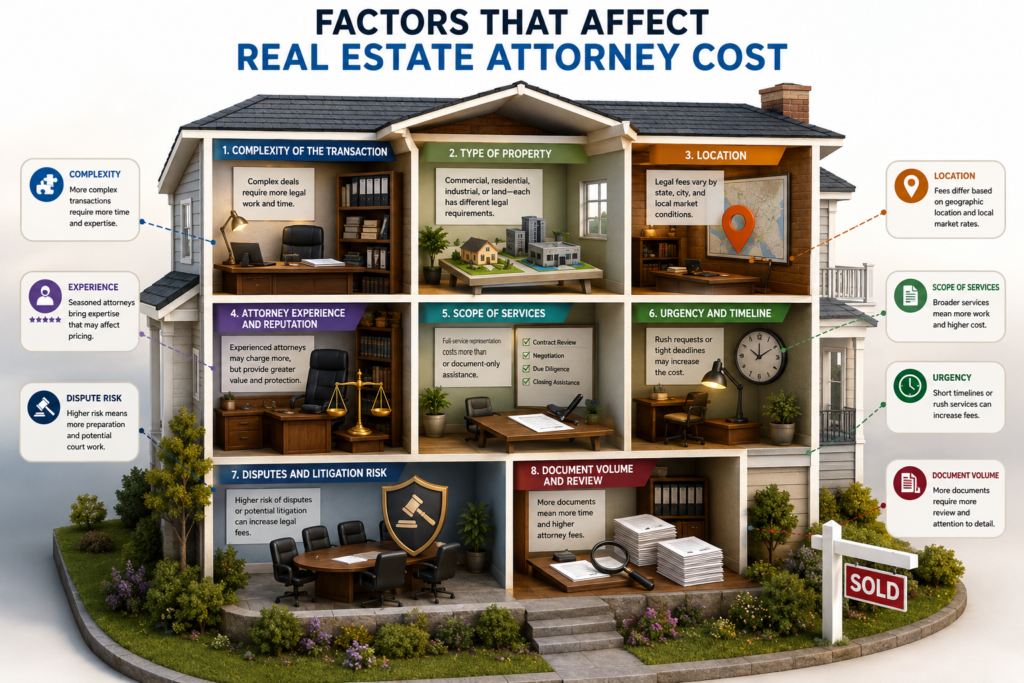
Not every transaction costs the same, and it helps to know why before you get a quote.
Location
State and city matter enormously. In states like New York and New Jersey, attorney involvement in closings is standard practice and often required, so fees are baked into typical closing costs. In states where attorneys are optional, fees may run lower simply because of local market competition.
Transaction Complexity
A simple single-family home sale with a traditional mortgage is far less work than a short sale, a foreclosure purchase, a property with title defects, or a deal involving multiple owners or an estate. Complexity always drives the price up.
Residential vs. Commercial
Commercial deals involve more due diligence, more parties, and more negotiation. That’s why fees for a commercial real estate lawyer tend to run significantly higher than residential rates, sometimes billed hourly rather than flat, given the unpredictable scope of work. The Consumer Financial Protection Bureau notes that loan-related closing costs vary widely by lender and location, which is exactly why getting an itemized quote matters regardless of transaction type.
Attorney Experience and Firm Size
Boutique solo practitioners often charge less than large firms with brand recognition and a bigger support staff. That doesn’t mean cheaper is always better. Ask about experience with your specific deal type.
Do You Actually Need a Real Estate Attorney?
In some states, hiring a real estate attorney is legally required for closings. In others, it’s optional but strongly recommended in specific situations:
- You’re buying a short sale, foreclosure, or distressed property
- The property has title issues, liens, or boundary disputes
- You’re purchasing commercial property or land for development
- The seller is an estate, a trust, or involves multiple heirs
- You’re negotiating a for-sale-by-owner transaction without a real estate agent
- The contract includes unusual contingencies or seller financing
If you’re buying into one of the upcoming real estate projects or any new-development property, having an attorney review the contract is especially wise. These agreements often include clauses that favor the developer. It’s also worth reviewing your Closing Disclosure carefully, since this is the document that shows the final, legally binding version of every fee you’re being charged, attorney fees included.
How to Save on Real Estate Lawyer Fees
You don’t have to accept the first quote you get. A few practical ways to keep costs reasonable:
- Get at least three quotes. Fees vary more than people expect, even within the same city.
- Ask for a flat fee upfront. This avoids surprise hourly overages on straightforward deals.
- Clarify what’s included. Some attorneys charge extra for title search, wire transfers, or document recording. Ask before you sign.
- Bundle services when possible. If your attorney also handles title insurance, you may save on redundant fees.
- Avoid unnecessary complexity. Resolving disclosure issues or paperwork problems before you hire an attorney can reduce billable hours.
Real Estate Attorney Fees vs. Other Closing Costs
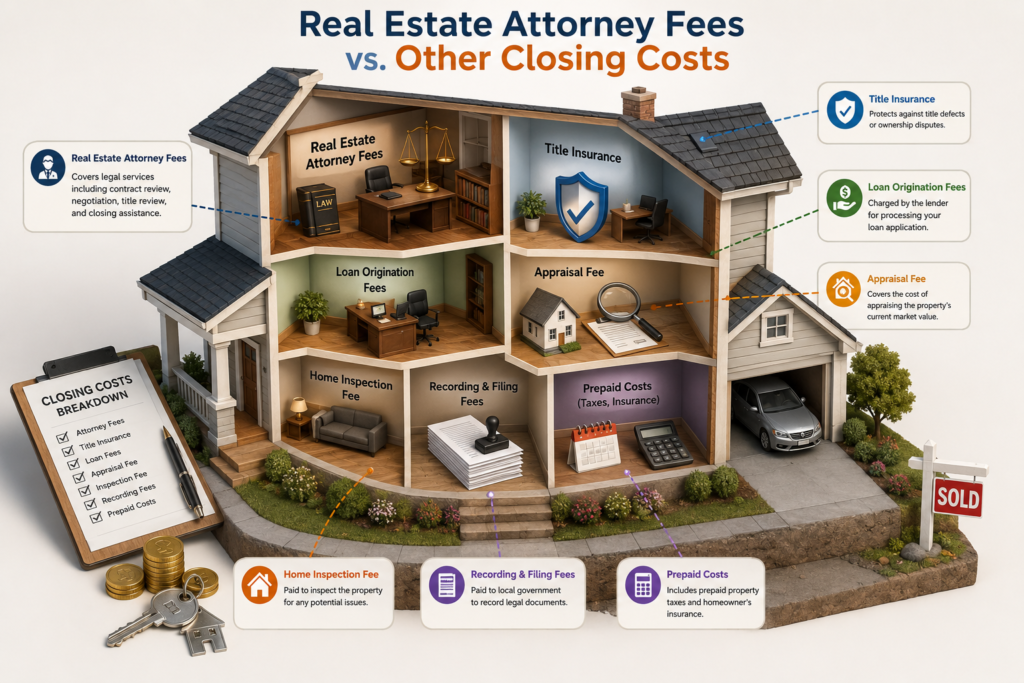
It’s worth putting attorney fees in context. On a typical home purchase, total closing costs run 2-5% of the purchase price, and attorney fees are usually just one slice of that pie, alongside lender fees, title insurance, recording fees, and inspection costs. For a $350,000 home, that might mean $7,000-$17,500 in total closing costs, with the attorney’s portion representing roughly 5-15% of that total, depending on your state and the complexity of the deal.
Frequently Asked Questions
Are real estate attorney fees negotiable? Yes, in many cases. Flat fees especially can be negotiated, particularly for straightforward transactions or if you’re a repeat client. It never hurts to ask.
Who pays the attorney fees, buyer or seller? Each party typically hires and pays for their own attorney. In some states, sellers cover part of the closing attorney’s fee if the same attorney handles both sides of a simpler transaction, though this varies by region.
Is a real estate attorney the same as a closing agent? Not always. A closing agent, sometimes a title company representative, handles document signing and fund transfers, while a real estate attorney provides legal advice, contract review, and dispute resolution. In attorney-closing states, one person may do both jobs.
Can I skip hiring an attorney to save money? In states where it’s not legally required, you can technically skip it. But doing so on a complex deal, a FSBO sale, or a commercial transaction increases your risk of costly mistakes that outweigh the fee you saved.
What’s a reasonable real estate attorney cost for a simple home purchase? For a standard residential closing with no major complications, a $500-$1,200 flat fee is typical in most markets, though this varies by state and attorney experience.
Final Thoughts
This isn’t just another line item to grumble about. It’s often what stands between you and a costly legal mistake. Whether you’re closing on your first home, navigating a commercial deal, or reviewing contracts for a new development, the right attorney pays for themselves many times over by catching problems before they become expensive ones.
Before your next closing, take the time to get quotes, ask what’s included, and choose an attorney whose experience matches your transaction type. A short call with two or three local attorneys before you sign anything can save you both money and stress down the line.