

If you’ve been browsing property portals or developer websites, you’ve probably come across listings tagged Coming Soon. These are real estate projects that have been announced but haven’t officially launched for sale yet. For buyers and investors, this early stage can be a genuine opportunity to secure better pricing and preferred units but it also comes with uncertainty that fully launched projects don’t have. This guide covers everything from how these projects work to how to evaluate them before committing any money.

What Does Coming Soon Mean in Real Estate?
A coming soon tag means a developer has revealed basic information about an upcoming project location, expected unit types, amenities, and a rough timeline but full bookings, final pricing, and detailed floor plans haven’t been released yet. It’s essentially a teaser phase meant to build interest before the official launch.
This stage is different from an under construction or ready to move listing, since almost nothing about a coming soon project is final. Even the project name, unit sizes, or amenities list can still change before launch.
Coming Soon vs. Pre Launch vs. Official Launch
| Stage | What’s Available | Pricing | Risk Level |
|---|---|---|---|
| Coming Soon | Basic project info only | Not announced | Highest |
| Pre-Launch | Registration/EOI open, partial details | Introductory/estimated | High |
| Official Launch | Full floor plans, brochures, payment plans | Confirmed | Moderate |
| Under Construction | Physical progress visible | Market rate | Lower |
| Ready to Move | Completed unit | Final/negotiable | Lowest |
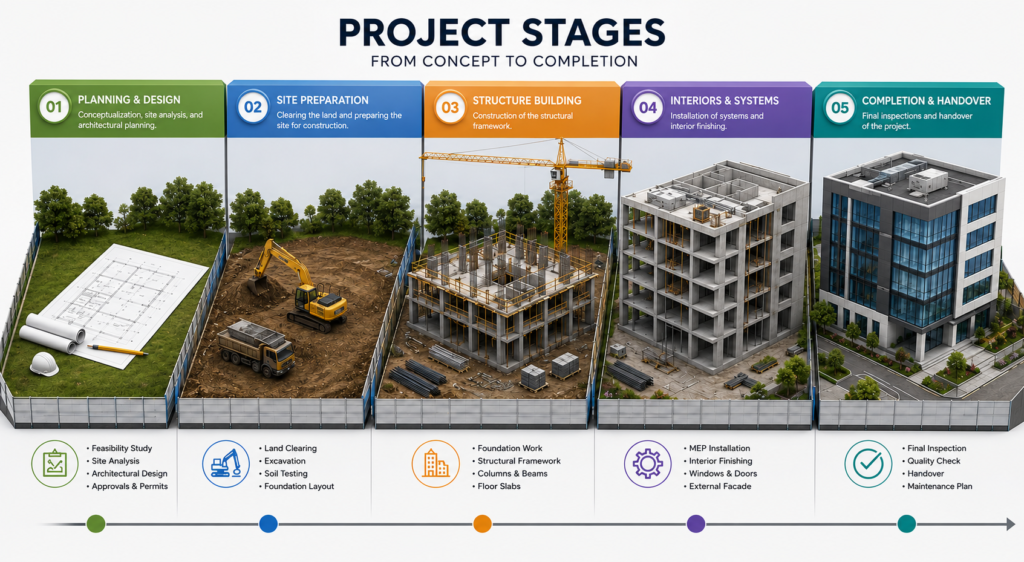
How Coming Soon Projects Typically Move Forward
- Announcement: The developer shares initial project details publicly — location, land size, approximate number of units, and target completion window.
- Pre-Registration / EOI (Expression of Interest): Interested buyers can sign up, often with a small refundable token, to get early access once bookings officially open.
- Pre-Launch Offers: Developers often reward early registrants with discounted pricing, flexible payment terms, or priority in unit selection.
- Official Launch: Full pricing, unit layouts, brochures, and payment schedules are released to the public.
- Construction Milestones: The project proceeds through foundation, structure, finishing, and handover stages — often with payment installments tied to each milestone.
- Possession/Handover: Buyers receive final documentation and keys once the project is completed and approved for occupancy.
Why Developers Use the Coming Soon Strategy
- Demand testing: Gauge how much interest exists before finalizing unit mix, pricing, or design.
- Marketing momentum: Build anticipation and urgency ahead of the official launch date.
- Early cash flow: Token payments and EOIs can help fund early stage development costs, land payments, or marketing.
- Competitive positioning: Capture buyer attention before competing projects in the same area launch.
- Investor confidence signal: A strong pre registration response can be used to attract institutional investors or additional financing.
What’s In It for Early Buyers and Investors?
- Lower entry pricing: Pre-launch prices are typically 10-25% below post-launch or market rates, depending on the developer and location.
- First pick of units: Early registrants often get priority in choosing floor level, corner units, or preferred views.
- Flexible payment plans: Developers frequently offer extended installment schedules for early buyers, reducing upfront cash requirements.
- Potential capital appreciation: If the project and location perform well, property value can rise meaningfully between booking and completion.
- More negotiating room: Early-stage developers are sometimes more open to negotiating extras (parking, storage, minor customizations).

What You Should Watch Out For
- Approval and permit delays: Zoning approvals, environmental clearances, or municipal permits can push back timelines by months or years.
- Changing terms: Final pricing, unit sizes, amenities, or even the developer’s ownership structure may differ from what was initially announced.
- Developer track record risk: With less to verify at this stage, a developer’s history of delivering (or not delivering) past projects matters more than ever.
- Limited legal protection: Pre-launch agreements or EOI forms often carry fewer buyer protections than post-launch, regulator-approved sale contracts.
- Market fluctuation: Property values can also fall between booking and completion, especially in longer-timeline projects.
- Liquidity risk: Reselling a pre-launch booking before the project is complete can be difficult, and some contracts restrict resale entirely.
Typical Costs Involved at This Stage
- Token/reservation amount: A small, often refundable amount to register interest (varies widely by developer and market).
- Booking amount: A larger, usually non-refundable percentage paid once official booking opens.
- Installments: Remaining payment is typically spread across construction milestones.
- Additional charges: Development charges, registration fees, and possible taxes should be confirmed upfront rather than assumed.
Always ask for a written payment schedule before transferring any amount, and confirm which portions are refundable versus non-refundable.
How to Evaluate a Coming Soon Real Estate Project
- Check the developer’s track record: Review at least their last 2-3 completed projects — were they delivered on time and as advertised?
- Verify approvals: Confirm land ownership, zoning status, and any regulatory clearances required in your jurisdiction.
- Read the fine print: Understand refund policies, cancellation terms, and what happens if the project is delayed or cancelled.
- Compare location fundamentals: Look at infrastructure development, connectivity, nearby amenities, and future area growth plans.
- Ask for documentation in writing: Verbal promises about pricing, delivery dates, or amenities mean little without written confirmation.
- Consult a real estate or legal advisor: Especially important for high-value pre-launch commitments or first-time buyers.
- Check for regulatory registration: In many markets, developers are required to register projects with a real estate regulatory authority before marketing them verify this where applicable.
Red Flags to Avoid
- Developer refuses to provide any written documentation before accepting payment
- No verifiable approvals or land ownership records
- Pressure tactics (“only 2 units left,” “price increases tomorrow”) without transparency
- No clear refund or cancellation policy
- Developer has a history of delayed or abandoned projects
FAQs
Is it safe to book a coming soon real estate project?
It can be safe if the developer is credible, project approvals are confirmed, and you review the refund policy before paying any token amount. Always get commitments in writing.
What’s the difference between “coming soon” and “pre-launch”?
“Coming soon” is usually the earliest announcement stage with minimal details available, while “pre-launch” refers to when registration or early booking has actually opened, often with introductory pricing.
Will I get my money back if I don’t proceed after registering?
This depends entirely on the developer’s stated policy. Token amounts are sometimes refundable while booking amounts often are not always confirm this in writing before paying anything.
Do these projects always launch on the announced date?
Not always. Approval delays, permit issues, financing gaps, or market conditions can push the timeline back significantly.
Is pre-launch pricing always the best deal?
Usually it’s lower than post-launch pricing, but always compare it against similar completed and under-construction projects in the same area to confirm it’s genuinely a good deal and not just a marketing discount.
Can I resell a coming soon project booking before it’s completed?
It depends on the developer’s contract terms. Some allow resale or transfer of booking rights (sometimes for a fee), while others restrict it until a certain construction milestone or full payment is reached.
What happens if the project gets delayed or cancelled?
This should be clearly outlined in your booking agreement. Look for clauses covering compensation, refund timelines, and what qualifies as an acceptable delay versus a breach of contract.
Final Thoughts
Coming soon real estate projects can offer real value to early buyers better pricing, more choice, and potential upside. But because so much is still unconfirmed at this stage, doing your homework on the developer, the project’s approvals, and the exact terms of any payment is essential before committing any money. Treat early registration as a serious financial commitment, not just an expression of casual interest.