

Wholesaling real estate is one of the most talked about entry points into property investing. The idea sounds almost too simple. You find a good deal and connect it with a buyer and earn a fee for bringing the two sides together. Yet behind that simple idea sit contracts and marketing and negotiation and a growing set of legal rules.
This guide gives you wholesaling real estate explained from the ground up. You will learn how the process works and what a real deal looks like and how much money is possible. You will also see the latest legal changes and the mistakes that trip up new wholesalers so you can start with open eyes.
Table of Contents
What Is Wholesaling Real Estate
Wholesaling is an investing strategy where you secure a property under contract and then pass that contract to another buyer for a fee. Put simply the wholesaler locks up a property with a contract and assigns that contract to another buyer in exchange for a fee. The wholesaler usually never takes ownership of the property and never does the renovation. resimpli
Think of the wholesaler as a matchmaker. One side is a seller who wants a quick and simple sale and the other side is a buyer who wants a discounted property to fix or rent or resell. The wholesaler earns the difference between the price agreed with the seller and the price paid by the end buyer.
Who Is a Real Estate Wholesaler
A wholesaler is an independent deal finder. Many are full time investors while others work on deals part time next to a job. They are not the same as real estate agents since they usually act for themselves and not as a representative of the seller.
This difference matters a great deal in the eyes of the law. A wholesaler holds a contract right and not the property itself and that is why many states now require clear written disclosure about the role.
Who Buys Wholesale Deals
End buyers are mostly cash investors and house flippers and landlords. They value speed and certainty and a price that leaves room for profit after repairs.
Some buyers prefer to work with a trusted wholesaler again and again. Once they know you bring honest and well researched deals they will often pay attention to every new listing you send.
How Wholesaling Real Estate Works Step by Step

The process follows a clear path from lead to payday. Each stage depends on the one before it so skipping steps usually leads to trouble. Understanding the full flow helps you see where the real work and the real risk sit.
Most deals move through the stages below. The timeline can be a couple of weeks or a couple of months depending on the property and the market.
Find Motivated Sellers
Wholesalers look for owners who want to sell fast. Common examples include people facing a move or an inherited house or costly repairs or a tired landlord. Marketing methods include direct mail and cold calling and online ads and driving through neighborhoods to spot neglected homes.
The goal is to reach owners before they list with an agent. A seller who needs speed will often accept a lower price in exchange for a simple and certain sale.
Put the Property Under Contract
Once a seller agrees on a price the wholesaler signs a purchase contract. This contract should include a clause that allows the wholesaler to assign it or to bring in another buyer. It should also give enough time to find an end buyer and often includes an inspection period as protection.
Clear and honest communication is critical here. The seller must understand that you plan to assign the contract and earn a fee and many states now require that this be stated in writing.
Find a Cash Buyer
Next the wholesaler markets the deal to a list of investors. Strong wholesalers build a buyers list over time using local investor meetups and online groups and social media and past deal contacts. A deal package usually includes photos and the estimated repair cost and the likely resale value.
The better your numbers the faster the deal moves. Buyers trust wholesalers who share accurate repair estimates and comparable sales and do not hide problems.
Assign the Contract or Double Close
When a buyer is found the wholesaler either assigns the contract or completes a double closing. Both methods are explained in more detail further down. In each case a title company or attorney handles the paperwork and the funds.
The wholesaler gets paid at closing. The fee is the gap between the seller price and the buyer price or a stated assignment fee.
A Simple Wholesaling Example
Imagine a house in decent shape that would sell for around 250 thousand dollars after repairs. It needs about 40 thousand dollars of work and the owner wants to sell fast. After negotiation the wholesaler signs a contract at 160 thousand dollars.
The wholesaler then finds an investor who agrees to buy the contract for 170 thousand dollars. The investor closes with the seller at the original price and pays the wholesaler a 10 thousand dollar fee. The investor takes on the repairs and the risk and the wholesaler walks away with the fee after closing costs.
This example is simplified and real deals carry extra costs for marketing and legal work and sometimes failed deals. It still shows the basic logic of how the strategy creates income.
Assignment vs Double Closing
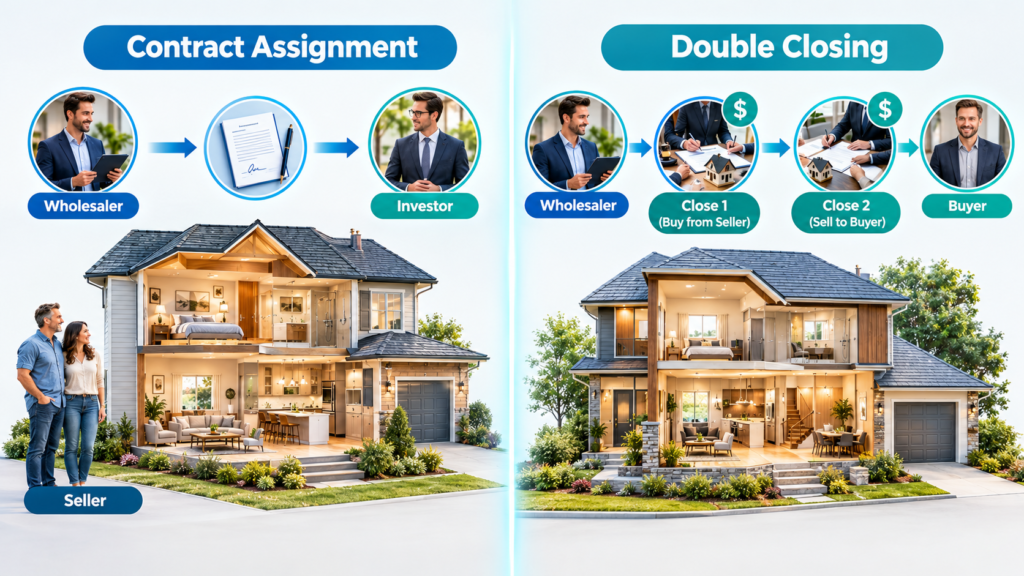
There are two common ways to complete a wholesale deal. The right method depends on state law and on the contract terms and on how comfortable the parties are with the structure. A local real estate attorney can tell you which fits your area.
Understanding both gives you flexibility and helps you read contracts with more confidence.
Contract Assignment
In an assignment the wholesaler transfers the contract rights to the end buyer for a fee. The end buyer then closes directly with the seller. The wholesaler never takes title and never needs funds to buy the property.
This method is simpler and cheaper. It does however make the fee visible to everyone in the deal which can create friction if the seller or buyer feels uneasy about it.
Double Closing
In a double closing the wholesaler actually buys the property in one closing and sells it in a second closing shortly after. Both transactions often happen on the same day. In stricter states wholesalers use double closings to avoid assignment issues. resimpli
This keeps the profit private and can fit better where assignment is restricted. The trade off is higher cost since you may need transactional funding and extra closing fees and title insurance.
Latest Update on Wholesaling Real Estate Laws
Wholesaling remains legal in most places but the rules are tightening fast. Wholesaling is still legal in most states yet the way you do it matters more than ever as more states crack down. Disclosure and registration are the main themes. resimpli
The updates below show where regulation is heading. Always confirm the current rules in your own state before you sign anything.
Ohio Disclosure Rules
Ohio now requires wholesalers to be open about what they do. Under a law that took effect on March 2 2026 wholesalers must clearly state their intention and business model and make clear they do not represent the seller. The law followed worries about aggressive offers aimed at older homeowners. jdsupra
Wholesalers who fail to disclose properly can face discipline and civil liability. A detailed legal summary of the Ohio wholesaling law explains the penalties and requirements.
Connecticut Registration
Connecticut created a formal registration system for wholesalers. The new rules came from Public Act 25 168 and take effect on July 1 2026 and the state says it is regulating wholesaling and not banning it. A real estate license is not required but registration and contract rules apply. dealmachine
New requirements like these show a pattern. Regulators want transparency and a record of who is doing wholesale business.
North Dakota and Arizona
North Dakota widened its law so that disclosure rules apply to all real property and not only homes. Wholesalers must state in writing that they hold only an equitable interest and may not be able to convey title and plan to earn a profit. Missing disclosures can let the other party cancel without penalty. onlineed
Arizona also follows a disclosure first approach. Wholesalers there must state in writing that they are not the owner and are assigning their interest and no real estate license is required. resimpli
Virginia and Other States
Some states focus on when repeated wholesale activity starts to look like unlicensed brokerage. Virginia for example has clarified how it treats repeated contract activity under its licensing laws. A state by state wholesaling law guide can help you see the broad picture but it is no substitute for local legal advice.
If you plan to wholesale often it may be worth considering a license or at least a close relationship with a real estate attorney.
Why Is Wholesaling Real Estate Trending
Wholesaling attracts attention because the entry barrier looks low. You do not need a large down payment or a loan and you do not need to fix up a house. Social media is full of success stories and short courses that promise fast profit.
At the same time many people feel locked out of traditional property buying because of high prices and borrowing costs. Wholesaling feels like a way in. The growing legal scrutiny is also a reason the topic keeps appearing in the news and in search results.
Pros and Cons of Wholesaling Real Estate
Like any strategy wholesaling comes with real advantages and real downsides. A fair look at both helps you decide if it fits your goals and your temperament. Hype should never replace honest planning.
The lists below sum up the most important points.
Benefits of Wholesaling
Capital needs are low compared with flipping or buying rentals. Deals can close in weeks and the skills you build in marketing and negotiation are useful across all of real estate. It also gives you a close look at how local markets and deal numbers work.
Success can lead to larger steps later such as flipping or holding rentals. Many investors start here to learn before they commit bigger amounts of money.
Risks and Downsides
Income is uneven. You may spend months on marketing and make no sale and some deals fall apart when a buyer backs out. Legal risk is also rising as more states add disclosure and licensing rules.
Reputation matters a lot. Treating sellers unfairly or overpromising to buyers can damage your name quickly and invite complaints or lawsuits.
How Much Can a Wholesaler Earn
Fees vary by market and by deal size. Many wholesalers aim for a few thousand dollars per deal in lower priced areas while stronger markets can support larger fees. Results depend on lead quality and how well you negotiate and how many deals you can close in a year.
Treat early numbers with caution. New wholesalers often spend heavily on marketing before the first closing and some never close a deal. Think of this as a business that takes time and effort to build and not as a quick payday.
Skills and Tools You Need to Start
Wholesaling rewards people who are organized and persistent. You need to be comfortable talking with homeowners and handling rejection and running numbers. A few core abilities make a big difference.
Strong tools also help but they cannot replace sound judgment. Start simple and grow your system as deals come in.
Marketing and Lead Generation
Reliable lead flow is the heart of the business. Direct mail and calling and online marketing all work when done consistently and respectfully. Tracking which method gives the best return helps you spend wisely.
Honest messaging is important. Never pretend to be the owner or a buyer who plans to keep the house if that is not true.
Negotiation and Deal Analysis
You must estimate the after repair value and the repair cost and the margin needed for the buyer. Overestimating the value is a common beginner error and it makes deals hard to sell.
Practice with real comparable sales in your area. The more accurate you are the more buyers will trust your deals.
Legal and Professional Support
A real estate attorney and a reliable title company are essential teammates. They review contracts and handle closings and help you stay inside local rules. Getting expert real estate investment planning services early can also help you set up a clear and compliant strategy before the first deal.
If you want to better understand pricing and ownership details before you sign a contract then professional property brokerage support can give you a useful second opinion.
Common Wholesaling Mistakes to Avoid
Most failed wholesalers repeat the same errors. The good news is that each one is avoidable with preparation. Knowing them in advance saves money and stress.
Here are the ones that cause the most trouble.
Ignoring Local Laws
Rules change quickly and what was fine last year may now require disclosure or registration. Skipping the legal check is the fastest way to run into penalties or a cancelled contract.
Review your contract templates with a local attorney and revisit them as laws change.
Overpricing the Deal
Setting a contract price too high leaves no room for the end buyer and the deal stalls. Investors can spot a weak deal at once and they will ignore wholesalers who waste their time.
Run careful numbers before you sign and be willing to walk away.
Poor Communication With Sellers
Pressure tactics and vague answers create distrust and complaints. Sellers deserve a clear explanation of what you are doing and why.
Honest and respectful behavior protects you legally and builds the reputation that brings repeat business.
Is Wholesaling Real Estate Worth It Reviews and Real Experiences
Experiences with wholesaling vary widely. Some people build steady businesses with strong buyer relationships and repeat deals while others burn out after months of effort with little to show. Results usually follow effort and local knowledge and consistency.
Be careful with expensive courses and flashy promises. Look for independent reviews and talk to active investors in your market before you pay for any training.
Overall wholesaling can be worth it for people who treat it as a real business and respect the law and the people they deal with. It is a poor fit for anyone hoping for easy money with no effort.
Frequently Asked Questions About Wholesaling Real Estate
What is wholesaling in real estate in simple words?
It means putting a property under contract and then selling that contract to another buyer for a fee. The wholesaler does not usually own or repair the property.
The profit comes from the gap between the price agreed with the seller and the price the end buyer pays.
Is wholesaling real estate legal?
In most states it is legal but rules differ. Some states require written disclosure and others require registration or restrict how deals are advertised.
Always check your state rules and speak with a local real estate attorney before you start.
Do I need a license to wholesale real estate?
Many states do not require a license but a few have rules that push repeat wholesalers toward licensing or registration. Connecticut and Arizona for example do not require a license but do require disclosures or registration.
Rules can change so verify with your state real estate commission.
How much money do I need to start wholesaling?
You do not need money to buy the property but you do need funds for marketing and legal review and possibly software. Costs depend on how aggressively you market.
Many beginners start small and reinvest early profits into more lead generation.
What is the difference between wholesaling and flipping?
A flipper buys a property and renovates it and sells it for profit. A wholesaler only contracts the property and passes the contract along without doing repairs.
Flipping carries more capital and risk while wholesaling carries more legal and deal flow risk.
Can you wholesale real estate without a buyers list?
It is possible but very difficult. A buyers list lets you sell a deal quickly and without it you may lose the contract before you find a buyer.
Start building your list from day one through local investor groups and online communities.
Is wholesaling real estate still profitable?
It can be profitable for those who find real deals and follow the law and keep costs under control. Competition and regulation have increased so success takes more skill than before.
Focus on trust and accuracy and you will stand out from careless operators.
Conclusion
Wholesaling real estate explained simply is a way to earn fees by connecting motivated sellers with investors who want discounted property. It offers a low cost way to learn the market but it is not a shortcut to easy money. Marketing and negotiation and legal care all matter.
The biggest shift today is regulation. More states are adding disclosure and registration rules and the best wholesalers are adapting by being transparent and keeping strong legal support. If you respect the law and treat sellers and buyers fairly you can build a durable business. This article is for general information only and is not legal or financial advice so consult a licensed attorney before you wholesale a property.