

When buying or selling a property, paperwork matters just as much as the property itself. One of the most important documents you may come across is the certificate of registration real estate document.
This certificate proves that a property has been officially registered with the appropriate government authority. It helps confirm ownership, prevents fraud, and makes future property transactions much easier.
In this guide, we’ll explain what a certificate of registration is, why it matters, how to get one, and how to verify it before purchasing a property.
Table of Contents
What Is a Certificate of Registration Real Estate?
A certificate of registration is an official document showing that a property has been legally recorded in government land records.
It gives property owners peace of mind because it confirms that their ownership rights are recognized by law.
Information Found on a Registration Certificate
A certificate of registration usually includes:
- Name of the registered owner
- Property address
- Registration number
- Date of registration
- Property description
- Details of mortgages or restrictions, if any
Certificate of Registration Real Estate vs. Title Deed
Although these documents are related, they serve different purposes.
| Feature | Certificate of Registration | Title Deed |
|---|---|---|
| Purpose | Confirms official registration | Transfers ownership |
| Issued By | Land Registry Office | Registrar or Seller |
| Proof of Ownership | Yes | Yes |
| Used in Property Sales | Yes | Yes |
Example
Suppose John buys a house from Maria.
- The title deed transfers ownership from Maria to John.
- The certificate of registration confirms that John’s ownership has been recorded in government records.
Why Is a Certificate of Registration Real Estate Important?
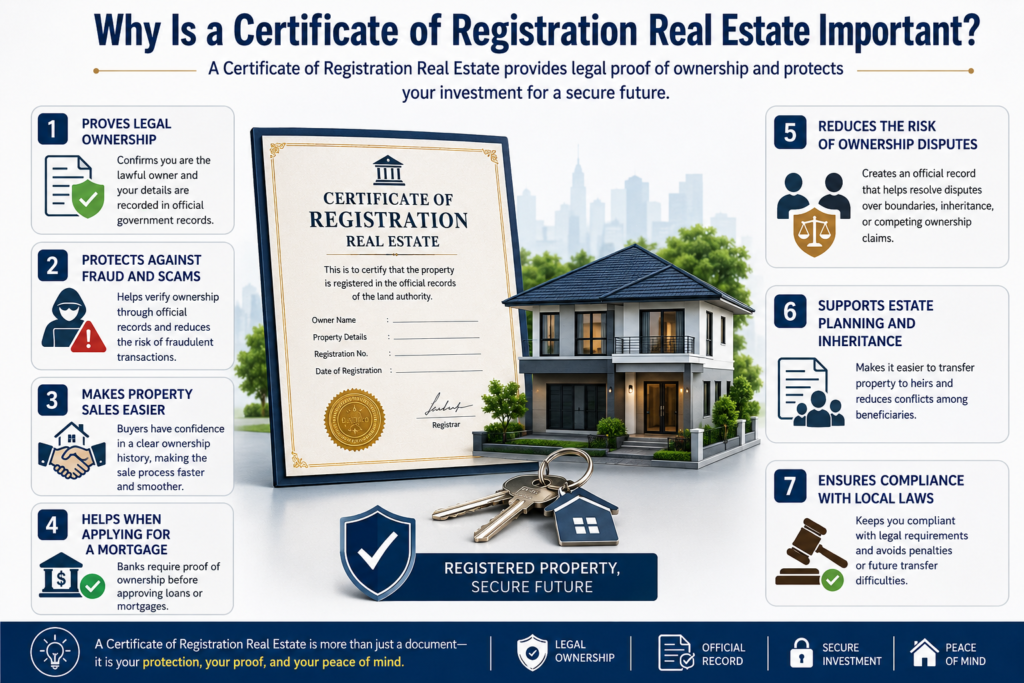
A Certificate of Registration Real Estate is more than just a legal document. It serves as official evidence that a property has been properly recorded with the relevant land authority. Whether you are buying a home, selling an investment property, or applying for financing, having a registered property can save you from many legal and financial problems.
Benefits of Having a Registration Certificate
1. Proves Legal Ownership
One of the biggest advantages of a registration certificate is that it confirms you are the lawful owner of the property. Since your ownership details are stored in official government records, it becomes much easier to prove your rights if questions arise in the future.
For example, if two people claim ownership of the same property, the registered owner’s information can help resolve the dispute quickly.
2. Protects Against Fraud and Scams
Real estate fraud is a concern in many countries. Unscrupulous individuals may try to sell properties they do not own or use forged documents to transfer ownership illegally.
A Certificate of Registration Real Estate helps reduce this risk because buyers, banks, and legal professionals can verify the ownership details through official records. This additional layer of security makes fraudulent transactions more difficult.
3. Makes Property Sales Easier
Most buyers prefer purchasing properties that are properly registered. A registration certificate gives potential buyers confidence that the property has a clear ownership history and is free from hidden issues.
Having this document readily available can also speed up the sale process, as there is less need for extensive investigations into ownership records.
4. Helps When Applying for a Mortgage
Banks and other financial institutions often require proof of ownership before approving a mortgage or home equity loan. A certificate of registration demonstrates that the property legally belongs to you and can be used as collateral.
Without registration, lenders may consider the property too risky and refuse to provide financing.
5. Reduces the Risk of Ownership Disputes
Property disputes can be expensive, stressful, and time-consuming. A registration certificate creates an official record of ownership, making it easier to settle disagreements over boundaries, inheritance claims, or competing ownership interests.
For instance, if a family member later claims they inherited part of the property, the registration records can serve as strong evidence of who legally owns it.
6. Supports Estate Planning and Inheritance
Registered properties are generally easier to transfer to heirs after the owner’s death. Since ownership information is already documented, family members can complete inheritance procedures with fewer complications.
This can help avoid conflicts among beneficiaries and simplify the distribution of assets.
7. Ensures Compliance with Local Laws
Many jurisdictions require property owners to register their real estate transactions within a specific timeframe. Failing to do so may result in penalties, delays, or difficulties when selling or transferring the property in the future.
By keeping your property properly registered, you stay compliant with local regulations and maintain clear legal ownership.
How to Obtain a Certificate of Registration Real Estate
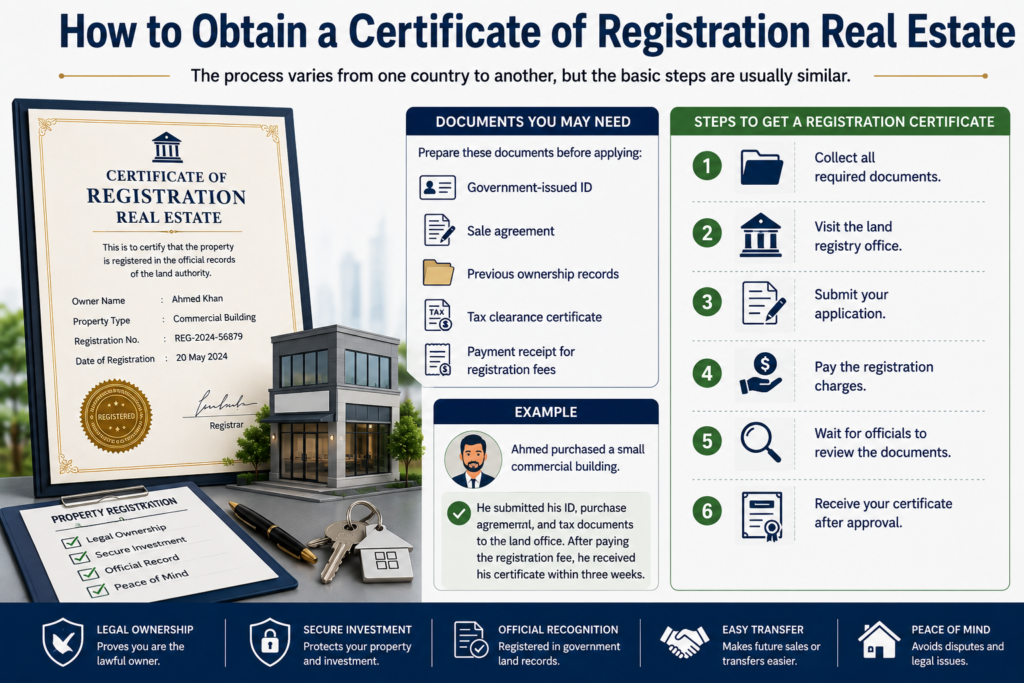
The process varies from one country to another, but the basic steps are usually similar.
Documents You May Need
Prepare these documents before applying:
- Government-issued ID
- Sale agreement
- Previous ownership records
- Tax clearance certificate
- Payment receipt for registration fees
Steps to Get a Registration Certificate
- Collect all required documents.
- Visit the land registry office.
- Submit your application.
- Pay the registration charges.
- Wait for officials to review the documents.
- Receive your certificate after approval.
Example
Ahmed purchased a small commercial building.
He submitted his ID, purchase agreement, and tax documents to the land office. After paying the registration fee, he received his certificate within three weeks.
Common Issues When Registering Real Estate
Property registration is not always smooth. Missing documents or incorrect information can cause delays.
Common Problems
- Incomplete paperwork
- Unpaid property taxes
- Incorrect owner details
- Boundary disputes
- Delays in government processing
Tips to Avoid Delays
- Double-check all documents before submission.
- Make sure taxes are fully paid.
- Verify property boundaries.
- Keep copies of every document.
How to Verify a Certificate of Registration Real Estate
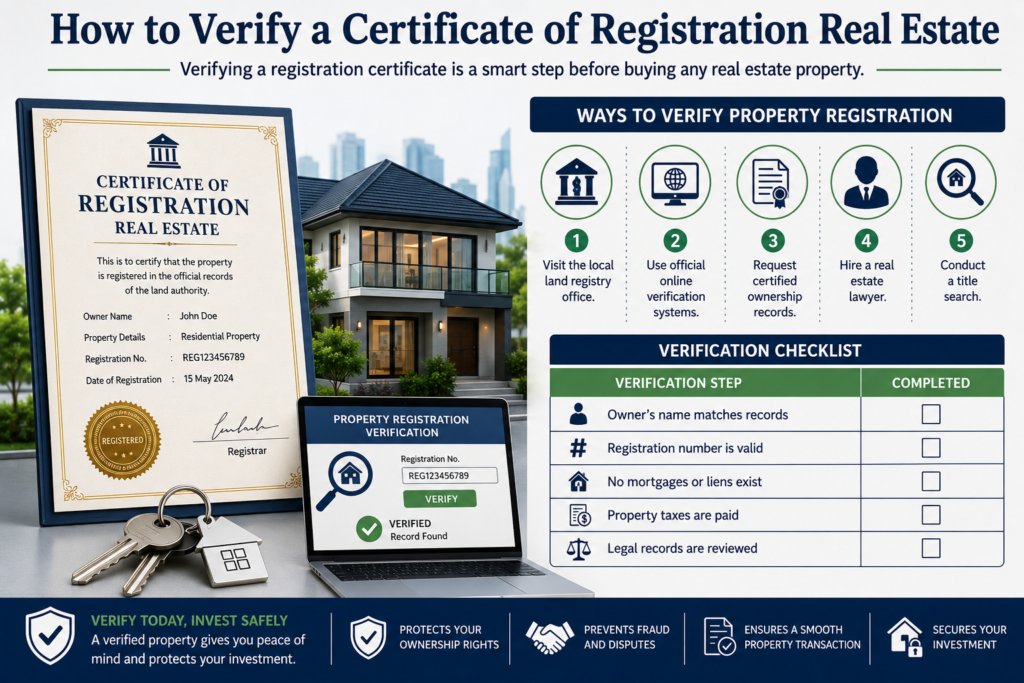
Verifying a registration certificate is a smart step before buying any real estate property.
Ways to Verify Property Registration
- Visit the local land registry office.
- Use official online verification systems.
- Request certified ownership records.
- Hire a real estate lawyer.
- Conduct a title search.
Verification Checklist
| Verification Step | Completed |
|---|---|
| Owner’s name matches records | □ |
| Registration number is valid | □ |
| No mortgages or liens exist | □ |
| Property taxes are paid | □ |
| Legal records are reviewed | □ |
Frequently Asked Questions
Is a certificate of registration the same as a title deed?
No.
A title deed transfers ownership from one person to another, while a certificate of registration confirms that ownership has been officially recorded.
Can I sell a property without a registration certificate?
Some places allow it, but most buyers and banks prefer properties that are properly registered.
What happens if I lose my certificate?
You can usually request a replacement from the land registry office by submitting an application and paying a small fee.
Conclusion
A certificate of registration real estate document is more than just paperwork. It is proof that your property ownership is legally recognized and protected.
Before buying, selling, or investing in real estate, always check that the property is properly registered. Taking a few extra steps today can save you from costly legal issues in the future.
Whether you are a first-time buyer or an experienced investor, understanding property registration is an important part of making safe and informed real estate decisions.