

Buying, selling, or investing in property is a major financial decision. Before signing any agreement, it’s important to Inspect real estate carefully. A property may look perfect during a tour, but hidden problems can lead to expensive repairs later.
A proper inspection helps you understand the true condition of a property, avoid unexpected costs, and make smarter decisions. In this guide, you’ll learn what to check, common warning signs, and how to evaluate a property with confidence.
Table of Contents
What Does It Mean to Inspect Real Estate?
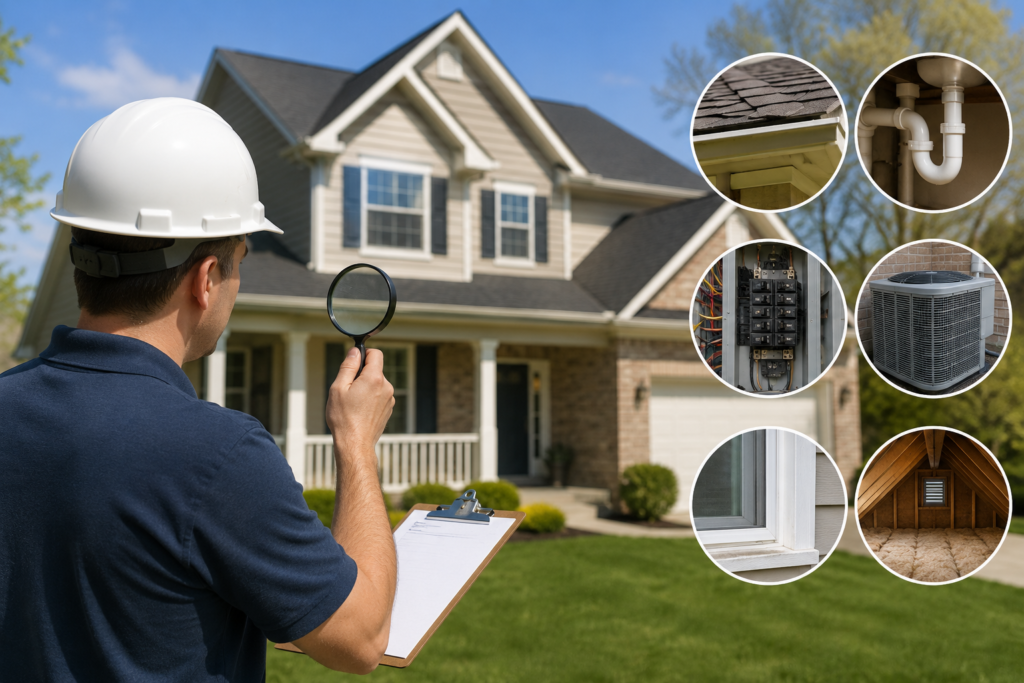
When you Inspect real estate you’re examining a property’s condition to identify any existing or potential problems. This includes checking the structure, major systems, safety features, and overall maintenance of the property.
A thorough inspection can reveal issues that aren’t visible at first glance, such as water damage, electrical concerns, or foundation problems.
During a real estate inspection, you should evaluate:
- Foundation and structure
- Roof condition
- Plumbing system
- Electrical system
- Heating and cooling systems
- Doors and windows
- Interior and exterior surfaces
- Signs of water damage or mold
The goal is simple: understand exactly what you’re buying, selling, or investing in.
Why Is It Important to Inspect Real Estate Before Buying?
Many property buyers focus on location, price, and appearance. While those factors matter, the condition of the property is equally important.
Imagine buying a house only to discover a leaking roof or major plumbing issue a few months later. These repairs can quickly add thousands of dollars to your expenses.
Benefits of a Property Inspection
- Identifies hidden problems before purchase
- Helps estimate future repair costs
- Improves negotiation power
- Reduces financial risks
- Provides peace of mind
A professional inspection gives you valuable information that can save money and prevent future headaches.
Key Areas to Inspect in Real Estate Properties
Not all property issues carry the same level of risk. Some problems are cosmetic, while others can seriously impact safety and value.
Real Estate Inspection Priority Table
| Area to Inspect | Why It Matters | Priority |
| Foundation | Supports the entire structure | High |
| Roof | Protects against weather damage | High |
| Electrical System | Safety and functionality | High |
| Plumbing | Prevents leaks and water damage | High |
| HVAC System | Comfort and energy efficiency | Medium |
| Windows & Doors | Security and insulation | Medium |
| Paint & Finishes | Appearance only | Low |
Foundation and Structure
The foundation is one of the most important parts of any property.
Look for:
- Large cracks in walls
- Uneven flooring
- Doors that don’t close properly
- Signs of settling
Roof Inspection
A damaged roof can lead to costly repairs.
Check for:
- Missing shingles
- Water stains
- Sagging areas
- Damaged gutters
Plumbing Inspection
Water damage is often expensive to repair.
Inspect:
- Water pressure
- Leaking pipes
- Drainage issues
- Water heater condition
Electrical Inspection
Electrical problems can create safety hazards.
Look for:
- Outdated wiring
- Frequently tripped breakers
- Damaged outlets
- Exposed wires
Real Estate Inspection Checklist for Buyers
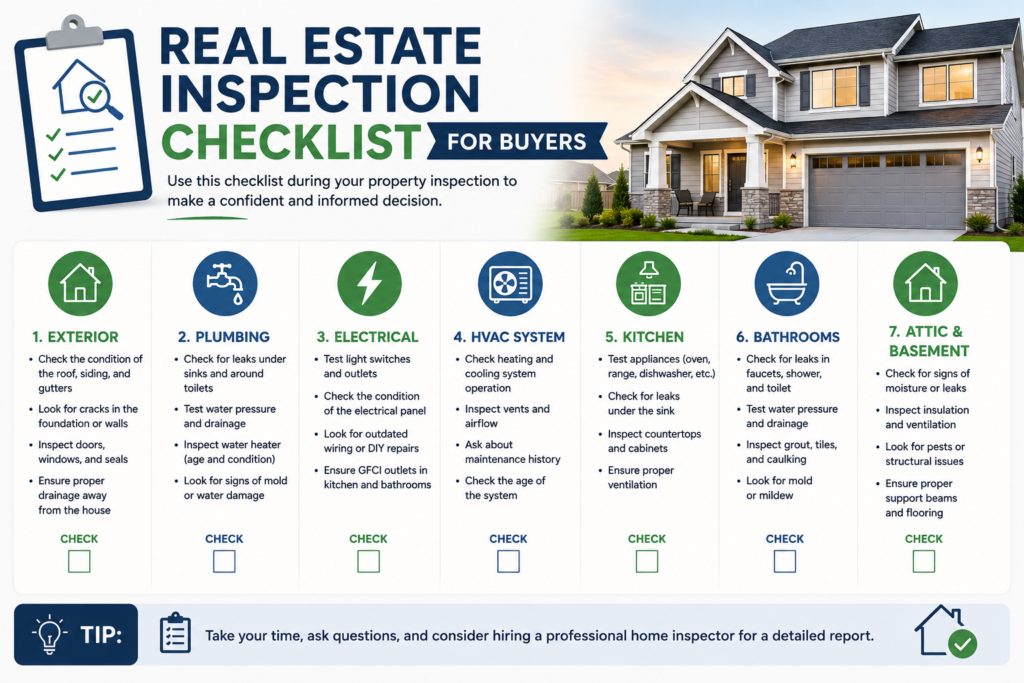
Use this checklist whenever you visit a property.
Exterior Checklist
✓ Inspect the roof
✓ Check drainage around the property
✓ Examine siding and exterior walls
✓ Look for foundation cracks
✓ Inspect driveways and walkways
Interior Checklist
✓ Test doors and windows
✓ Check ceilings for stains
✓ Look for cracks in walls
✓ Inspect flooring condition
✓ Test lights and electrical outlets
Utility Checklist
✓ Run faucets
✓ Flush toilets
✓ Test heating and cooling systems
✓ Inspect water heater
✓ Check electrical panel
A checklist helps ensure you don’t miss important details during the inspection process.
Common Red Flags Found During Real Estate Inspections
Some issues deserve immediate attention because they can affect safety, value, or future repair costs.
Warning Signs to Watch For
| Red Flag | Possible Cause |
| Water stains on ceilings | Roof leak |
| Mold smell | Moisture problems |
| Large wall cracks | Structural issues |
| Uneven floors | Foundation movement |
| Flickering lights | Electrical concerns |
| Low water pressure | Plumbing problems |
If you notice any of these issues, consider getting a professional opinion before moving forward.
Example How an Inspection Saved a Buyer Money
Let’s look at a real-world scenario.
A buyer found a home listed for $350,000 The property looked well-maintained and recently renovated.
However, during the inspection, the following issues were discovered:
- Roof damage near the garage
- Minor basement water intrusion
- Aging HVAC system
Estimated repair costs totaled approximately $8,000.
Using the inspection report, the buyer successfully negotiated a lower purchase price and saved thousands of dollars.
This example shows why it’s always worth taking the time to inspect real estate carefully.
Professional vs. DIY Real Estate Inspection
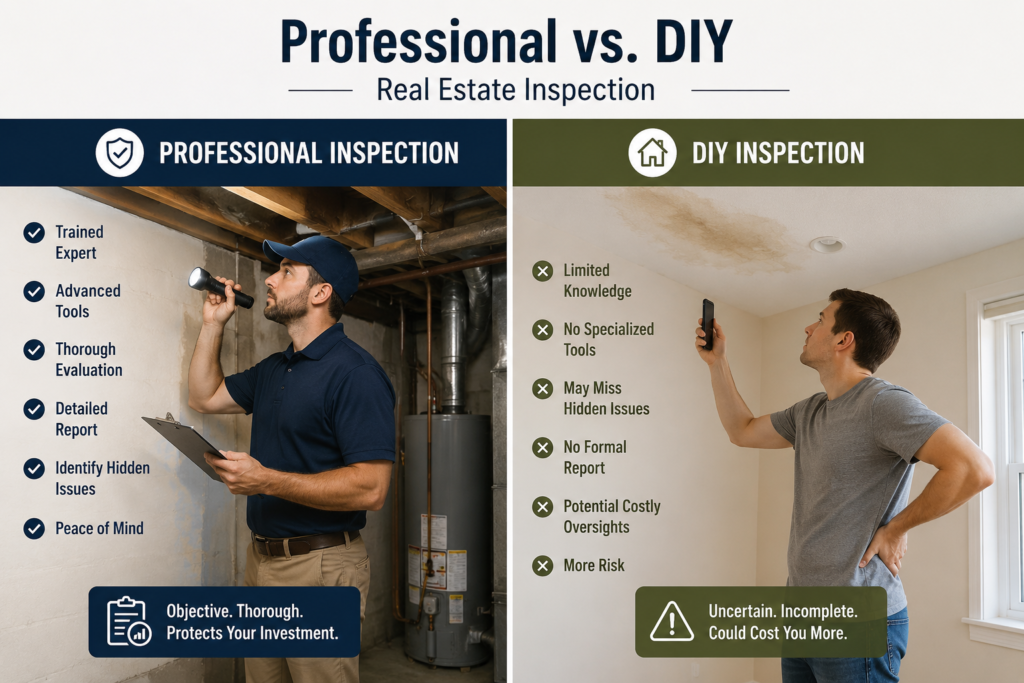
Many buyers perform their own walkthrough before hiring an inspector.
DIY Inspection
A personal inspection can help identify obvious issues such as:
- Wall cracks
- Water stains
- Damaged flooring
- Exterior damage
Professional Inspection
Professional inspectors have experience and specialized tools to detect hidden problems.
Benefits include:
- Detailed inspection reports
- Expert recommendations
- Better understanding of repair costs
- Identification of safety concerns
For most buyers and investors, a professional inspection is money well spent.
Tips for Getting the Most Out of a Real Estate Inspection
A property inspection provides more value when you’re actively involved.
Best Practices
- Attend the inspection if possible.
- Take notes and photos.
- Ask questions about any concerns.
- Review the final report carefully.
- Get repair estimates for major issues.
- Use findings during negotiations.
The more informed you are, the better decisions you’ll make.
Conclusion
Learning how to inspect real estate is an essential skill for buyers, sellers, and investors. A careful inspection helps uncover hidden problems, estimate future expenses, and protect your investment.
Whether you’re purchasing your first home or expanding your investment portfolio, never overlook the importance of a thorough property inspection. Spending a few hours evaluating a property today could save you thousands of dollars tomorrow.